

BG Wealth Sharing: SEC Sues Over $130M Ponzi Allegations
- MLM NewsNews
- October 31, 2026
SEC Files Lawsuit Against BG Wealth Sharing and DSJ Exchange
BG Wealth Sharing is back in the headlines, but this time it is not celebrating trading profits, new members, or another promotional event.
The United States Securities and Exchange Commission (SEC) has filed a civil lawsuit against BG Wealth Sharing Ltd and DSJ Exchange Pty Ltd, alleging that the companies operated a fraudulent cryptocurrency investment program.
The complaint was filed on October 29, 2026, in the U.S. District Court for the Northern District of California.
According to the SEC, the operation raised more than $130 million from tens of thousands of retail investors, using supposedly sophisticated trading signals and misleading claims about regulatory approval.
The SEC also alleges that the companies misappropriated investor funds and displayed profits that were not supported by genuine trading activity.
This is a major development for an investment platform that collapsed earlier in 2026.
Let’s examine the allegations, the financial figures, and what this case means for affected investors.
Before we jump in!
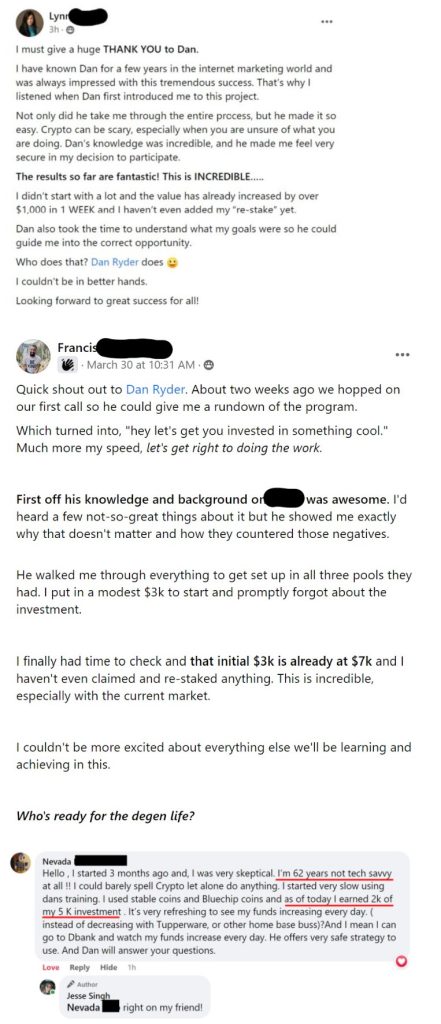
If you’re looking for legitimate ways to build income online, my good friend Dan offers a FREE training showing a crypto cash flow strategy that has helped people achieve approximately 3% to 10% per month while maintaining 100% control of their own funds (as with any investment, results aren’t guaranteed).
You’ll also hear from Paul, who teaches complete beginners how to build an online business using AI and proven systems.
Both have been faithfully helping people for years, and I’ve seen some incredible testimonies.
Most importantly, remember that our greatest hope is never found in money, but in Jesus Christ. These are simply tools that can help us become wise stewards of what God has entrusted to us.
Proof this works:
Now, let’s dig in.
What Was BG Wealth Sharing?

BG Wealth Sharing promoted itself as a cryptocurrency investment opportunity built around advanced trading signals.
Investors were directed to use DSJ Exchange, a platform that supposedly executed cryptocurrency trades and generated attractive returns.
The process was straightforward.
Participants deposited cryptocurrency into DSJ Exchange.
They received trading signals through a messaging application.
They entered those signals into the platform.
And the system displayed supposed profits.
BG Wealth Sharing presented this process as an accessible way for ordinary people to participate in profitable cryptocurrency trading.
However, the SEC now alleges that the trading operation was largely fictional.
According to the complaint, investor funds were not used for the represented trading activities.
Instead, the platform displayed fabricated transactions and earnings while investor money was allegedly misappropriated.
That is a very different business model from the one promoted to participants.
BG Wealth Sharing Promised Extraordinary Returns
One of the biggest warning signs was the company’s promised investment performance.
According to the SEC complaint, BG Wealth Sharing advertised returns of at least 60% per month.
It also claimed investors could double their principal in approximately 40 days.
The platform reportedly promoted these results as carrying no investment risk.
Those claims should have raised immediate concerns.
Legitimate cryptocurrency markets are volatile.
Prices move unpredictably, and even experienced traders experience losses.
There is no reliable investment strategy that can guarantee extraordinary monthly returns without risk.
BG Wealth Sharing attributed its supposed performance to proprietary trading technology developed by a figure presented as Professor Stephen Beard.
The company claimed its trading signals achieved 99.6% accuracy.
But impressive percentages mean very little without independently verifiable trading records.
The SEC alleges that the underlying trading profits did not exist.
How Did DSJ Exchange Fit Into the Operation?
DSJ Exchange served as the supposed trading platform.
Investors were instructed to open accounts, deposit cryptocurrency, and enter signals supplied by BG Wealth Sharing.
The application then displayed trading transactions and growing account balances.
According to the SEC, these balances were not supported by the represented trading activity.
That distinction is essential.
A cryptocurrency balance displayed on a private website is not necessarily evidence that the operator holds sufficient assets to honor withdrawals.
Investors should always distinguish between a platform’s internal accounting figures and independently verifiable funds.
The SEC alleges that DSJ Exchange helped create the appearance of a legitimate trading business while investor money was diverted elsewhere.
More Than $130 Million Raised From Investors
The scale of the alleged operation is substantial.
According to the SEC complaint, BG Wealth Sharing and DSJ Exchange received more than $130 million from over 223,000 blockchain addresses between March and early June 2026.
Those addresses should not be confused with 223,000 unique individuals.
A single person can control multiple cryptocurrency wallets.
Nevertheless, the number illustrates the extensive transaction activity associated with the program.
The SEC alleges that the scheme attracted tens of thousands of retail investors across the United States and abroad.
Investors in more than 40 U.S. states and multiple U.S. territories were reportedly affected.
The complaint also alleges that the defendants returned no more than $25 million to wallet addresses likely associated with investors in payments resembling a Ponzi scheme.
The SEC describes investor losses as exceeding $100 million.
The $130 million figure represents money allegedly raised during the SEC’s identified period, not a separately established final net-loss calculation.
Because the platform operated outside that narrower transaction window, the complete historical amount involved could differ.
Related Posts:
BG Wealth Sharing Review: Another “Click a Button” Ponzi That Deserves a One-Star Yelp Rating
BG Wealth Sharing & DSJEX Fraud Warnings Issued by Canada’s BCSC
BG Wealth Sharing Ponzi Warning Issued by Philippines SEC Targeting OFWs
BG Wealth Sharing Investor Alert Issued by Utah as “Click-a-Button” Ponzi Keeps Spreading
BG Wealth Sharing & DSJEX Fraud Warning Issued by Saskatchewan Regulator (FCAA)
FBI Seizes BG Wealth Sharing Domain — But the Scam Already Packed Up and Moved
How BG Wealth Sharing Used SEC Filings to Build Trust
One of the most important allegations concerns misuse of the SEC’s public filing systems.
BG Wealth Sharing filed a Form ADV claiming exempt reporting adviser status.
DSJ Exchange filed a Form D associated with a purported $100 million exempt securities offering.
The companies then allegedly promoted these filings as proof that they were officially licensed or approved by the SEC.
But filing a document with a regulator does not mean that regulator endorses the business.
A Form ADV can disclose information about an investment adviser or exempt reporting adviser.
A Form D is a notice associated with certain exempt securities offerings.
Neither document is a certificate guaranteeing that an investment is legitimate, profitable, or safe.
The SEC alleges that the filings contained false information and were used to create a misleading impression of regulatory approval.
This is an important lesson for investors.
A document appearing in a government database is not the same as government approval of an investment opportunity.
BG Wealth Sharing Allegedly Created Fake SEC Certificates
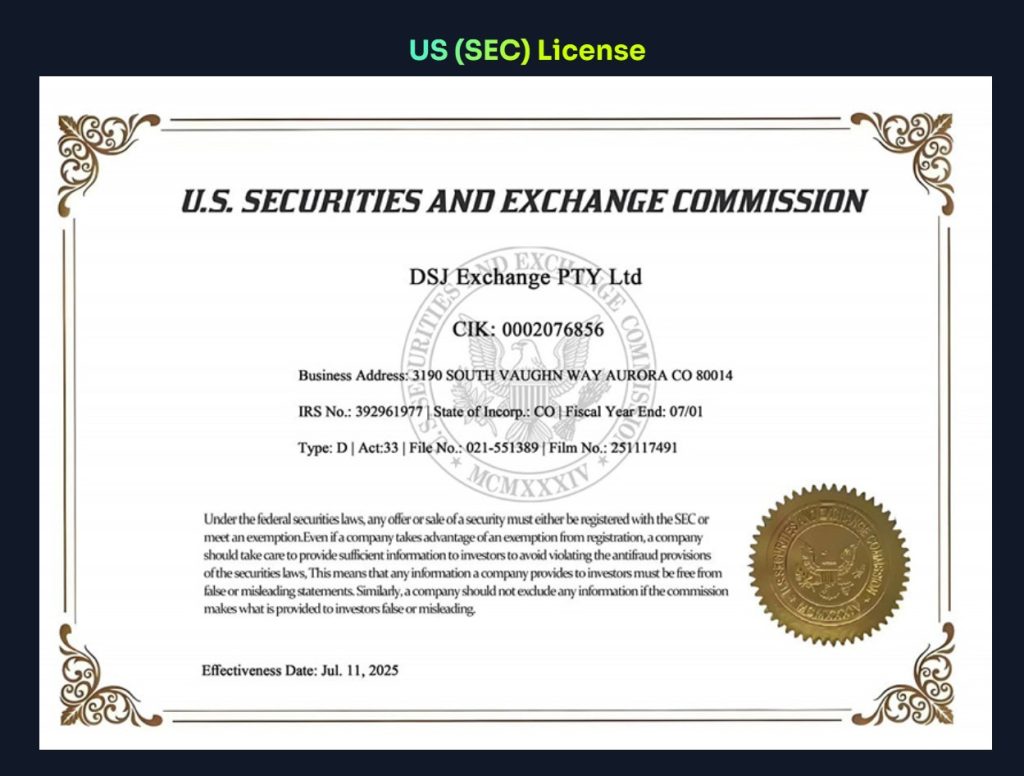
The allegations extend beyond ordinary filing misuse.
According to the SEC complaint, the defendants also circulated fabricated registration certificates bearing the SEC’s seal.
These documents supposedly demonstrated that the companies had received official authorization.
However, the SEC says it did not issue those certificates.
The agency does not issue the type of registration certificates that were promoted to investors.
This matters because official-looking documents can be highly persuasive.
An investor may see a government seal, a registration number, and professional formatting and assume the opportunity has been thoroughly reviewed.
But fraudulent operators can create convincing documents.
That is why verification should always be performed independently through official regulatory resources.
The SEC has since removed the BG Wealth Sharing Form ADV and DSJ Exchange Form D from its website.
Who Was Professor Stephen Beard?

BG Wealth Sharing promoted an individual known as Professor Stephen Beard as its founder and chief executive officer.
He was presented as the person responsible for the company’s advanced trading technology.
According to the SEC complaint, Beard appeared in promotional videos and communicated with investors through online channels.
However, the SEC states that it believes Stephen Beard was an assumed identity.
That raises significant questions about who was actually controlling the company.
The available complaint does not publicly identify the individual or individuals operating behind that persona.
Claims that a promotional character was AI-generated should be treated separately from what the SEC has formally alleged.
The complaint establishes the agency’s belief that Beard was an assumed identity; it does not conclusively identify the technology used to portray him.
The MLM Recruitment Structure Helped BG Wealth Sharing Grow
BG Wealth Sharing did not rely solely on cryptocurrency trading promises.
According to the SEC, the program also used a multilevel recruitment structure.
Participants could receive additional trading signals and qualify for bonuses by introducing new investors.
The complaint describes up to 12 promotional levels.
Recruitment incentives included commissions, rewards, and transaction-volume-related payments.
The company also used social media, online meetings, and promotional events to expand its reach.
The SEC identifies roadshows in Las Vegas, Hawaii, and Utah, along with other investor recruitment activities.
One promoter in California reportedly reached Level 7 with approximately 5,000 downstream investors.
This demonstrates how quickly a recruitment-driven investment opportunity can expand.
However, recruitment activity does not establish the legitimacy of the underlying investment.
When commissions depend heavily on attracting additional participants, investors should carefully investigate where the actual returns originate.
BG Wealth Sharing Collapsed Amid Withdrawal Problems
BG Wealth Sharing’s collapse became apparent during 2026.
According to the SEC complaint, investors initially received some withdrawals, which helped establish confidence in the platform.
However, the defendants allegedly discouraged withdrawals through fees reaching 20% and delays lasting several days.
After authorities seized one of the company’s principal website domains in April 2026, the operators allegedly blamed a Chinese hacking incident.
Withdrawals were eventually blocked.
The SEC further alleges that investors were asked to make additional tax payments to access their funds.
Some were also directed to deposit additional cryptocurrency to migrate their balances to another platform called HQI Exchange, or HQIEX.
According to the complaint, investors who made these payments remained unable to withdraw.
This sequence is particularly concerning because it combines several familiar investment-fraud warning signs: frozen withdrawals, unexpected fees, claims of technical problems, and requests for additional deposits.
Who Was Behind BG Wealth Sharing?
The SEC’s lawsuit names two corporate defendants:
BG Wealth Sharing Ltd and DSJ Exchange Pty Ltd.
Both were incorporated in Colorado.
The complaint alleges that the operation was controlled by individuals located outside the United States.
However, it does not publicly identify the ultimate operators by name.
The available reporting has also raised questions about the role of certain promoters, but appearing in promotional material does not establish individual criminal or civil liability.
At this stage, the complaint focuses on the two named entities.
Determining who actually controlled the wallets, websites, promotional accounts, and financial operations will be important for understanding the full scope of the alleged scheme.
What Is the SEC Seeking in Its Lawsuit?
The SEC alleges violations of federal securities antifraud provisions.
It also brings claims against BG Wealth Sharing involving investment-adviser reporting requirements.
The agency is seeking permanent injunctions, disgorgement of alleged ill-gotten gains with prejudgment interest, and civil monetary penalties.
The SEC is also requesting restrictions related to BG Wealth Sharing’s ability to submit certain adviser filings.
These are requests for relief, not penalties that have already been awarded.
The lawsuit remains a civil enforcement action at the filing stage described here.
No final judgment establishing liability is identified in the October 30 announcement.
Can BG Wealth Sharing Investors Recover Their Money?
Recovering cryptocurrency from a collapsed investment operation can be extremely difficult.
The challenges increase when operators are unidentified, funds have moved through numerous wallets, or assets have been transferred across jurisdictions.
However, investors should not assume that a civil lawsuit guarantees either recovery or permanent loss.
Actual recovery depends on whether assets can be identified, frozen, seized, and ultimately distributed through an authorized process.
Affected investors should preserve all transaction records, wallet addresses, account screenshots, promotional materials, and communications.
They should also monitor official SEC announcements and report relevant information to appropriate authorities.
Most importantly, investors should be cautious of anyone promising guaranteed recovery in exchange for an upfront payment.
A recovery scam can turn an already painful financial loss into an even larger one.
Lessons From the BG Wealth Sharing SEC Lawsuit
This case highlights several important principles.
Extraordinary guaranteed returns deserve serious skepticism.
Professional-looking trading dashboards do not prove that trades are occurring.
Regulatory filings should never be confused with regulatory approval.
Recruitment commissions cannot substitute for genuine investment revenue.
And an executive appearing in promotional videos does not establish that the executive’s identity or qualifications are genuine.
Before depositing money into an investment platform, investors should verify the operator’s identity, regulatory status, financial disclosures, and source of returns.
If those facts cannot be independently established, the risks may be far greater than the promotional materials suggest.
Final Verdict: BG Wealth Sharing Faces Serious SEC Fraud Allegations

The SEC’s lawsuit represents a significant development in the BG Wealth Sharing story.
The regulator alleges that the companies raised more than $130 million through a fictional cryptocurrency trading program, misused public filings, circulated fabricated certificates, and misappropriated investor assets.
It also describes a recruitment structure that helped the operation spread across the United States and internationally.
These are serious allegations supported by a detailed civil complaint.
The legal process will determine what liability is ultimately established and what remedies may be available.
For investors, the most important lesson is straightforward.
Never confuse promised profits, official-looking documents, and recruitment excitement with independently verified financial legitimacy.
The Greatest Wealth Is Found in Jesus Christ
Before I finish, I want to share something more important than any financial opportunity.
Jesus Christ.
When people lose money, especially money they worked hard to earn, the consequences can be heartbreaking.
Some investors may feel ashamed, angry, or overwhelmed.
But a financial loss does not determine a person’s worth.
And no amount of wealth can provide what we need most.
Jesus asks in Mark 8:36 what it profits a person to gain the entire world but lose their soul.
That question applies to every one of us.
We can spend our lives pursuing financial success and still overlook our greatest need: reconciliation with God.
The Bible teaches that all have sinned and fallen short of God’s glory.
None of us can earn salvation through money, achievements, religion, or good works.
But God loves us and has provided the way.
Jesus Christ, the Son of God, lived without sin, died on the cross for our sins, and rose from the dead on the third day.
He is alive.
Through repentance and faith in Jesus Christ, we can receive forgiveness and eternal life.
Ephesians 2:8–9 teaches that salvation is by grace through faith, not by our own works.
If you have not surrendered your life to Jesus Christ, I encourage you to open the Gospel of John.
Read His words.
Learn why He came.
Understand His sacrifice on the cross and the truth of His resurrection.
Turn from sin and place your trust in Jesus Christ as your Lord and Savior.
Businesses can disappear.
Investments can collapse.
Money can lose its value.
But Jesus Christ is eternal, and the salvation He offers is worth more than all the wealth in the world.
All glory, honor, and praise to our Lord and Savior, Jesus Christ!
Tired of Scams? Here’s My #1 Recommendation
If you landed on this blog, you’re probably looking for a legitimate way to make money online.
Before we talk about business, I want you to know something far more important:
My greatest desire isn’t simply to help you make money—it’s to help you come to know Jesus Christ. Money comes and goes, but eternal life through Him lasts forever.
That said, God calls us to be wise stewards and to avoid deception. That’s why I expose scams and share opportunities that I personally believe can genuinely help people.
Today, I’d like to show you TWO income streams that have worked well for several years.
The first is a free training where we’re helping students generate approximately 3% to 10% per month ROI on their crypto while maintaining 100% control of their own funds. (As with any investment, results are never guaranteed.)
The second teaches you how to build an online business using AI and proven systems that can work for you 24/7.
Here are just a few results:
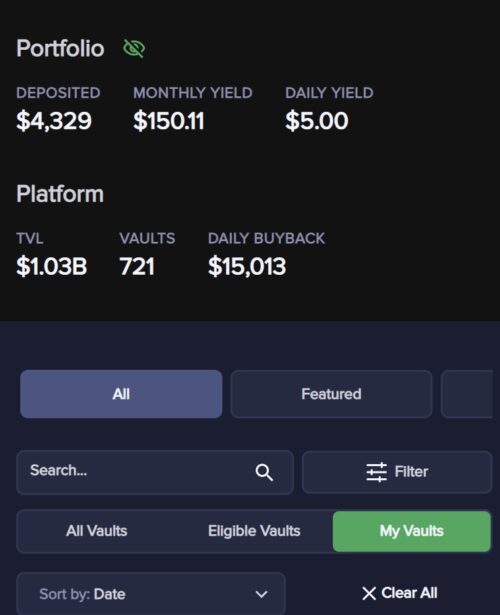
This student literally got started a few days ago and was already making around $5 per day!
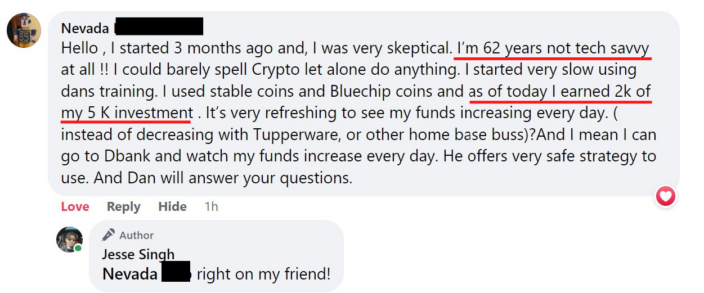
We have students earning incredible rewards that have been truly life-changing.
Take a look at one of our 62-year-old students who profited over $2,000.
Now we want to help YOU.
We have complete beginners building their first online income, along with students who have been with us for nearly a year and are seeing tremendous success.
The Digital Economy is one of the best opportunities available today for those willing to learn and stay consistent.
But remember this:
Financial freedom is wonderful, but knowing Jesus Christ is infinitely greater. He died for your sins, rose again three days later, and offers forgiveness, peace, and eternal life as a free gift to everyone who believes in Him.
If you haven’t accepted His gift of salvation, I encourage you to turn to Him today.
Follow me on social media below:
- Subscribe To My YouTube Channel Here.
- Follow Me On Facebook Here.
- Follow Me On Instagram Here.
- Follow Me On Twitter Here.
- Follow Me On Gab Here.
God bless you,

– Jesse Singh
P.S. If you’re tired of failing in business, click here and watch the free training. More importantly, if you don’t know Jesus Christ, seek Him with all your heart. He is the greatest treasure you’ll ever find.